
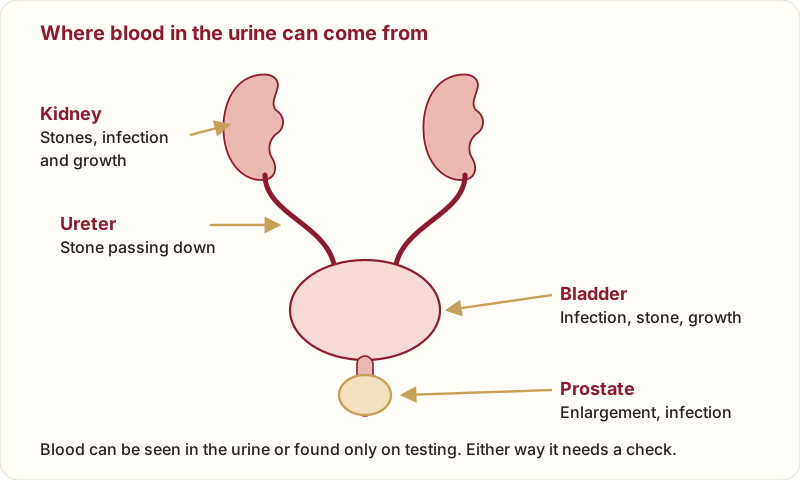
Swipe sideways to see the full diagram
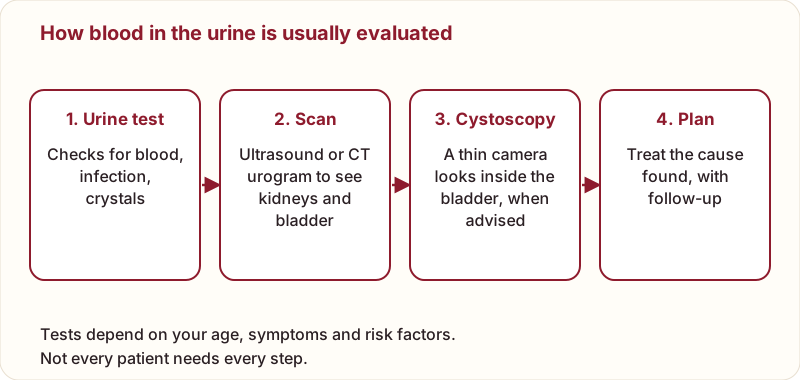
Swipe sideways to see the full diagram
Clinical symptoms
- Pink, red or tea-coloured urine, with or without clots
- Blood found only on a urine test (microscopic haematuria)
- Flank or lower abdominal pain, burning urination or a weak stream may be present, or there may be no pain at all
Common causes
- Urinary tract infection
- Kidney or ureteric stones
- Enlarged prostate (BPH)
- Injury, or a recent urinary procedure
- Cancer of the bladder, kidney or prostate; visible blood without pain can be an early sign
- Kidney diseases, and sometimes blood-thinning medicines
How it is evaluated
- Urine examination and urine culture
- Blood tests, including kidney function
- Ultrasound and, where needed, CT urography
- Cystoscopy, a thin camera examination of the bladder
Management options
- Antibiotics for infection, guided by the urine culture
- Stone treatment (ESWL, laser ureteroscopy or PCNL) when stones are the cause
- Medical or surgical treatment of prostate enlargement
- Biopsy or resection and treatment planning if a tumour is found
- Blood thinners are reviewed with the treating physician; never stop them on your own
When to see a urologist
Any visible blood in the urine, even once, needs prompt urological evaluation. Go to an emergency department if you cannot pass urine or have heavy bleeding, clots, fever or severe pain.
This information is for education and does not replace an examination. Please consult a doctor for your own condition.
Book Appointment