
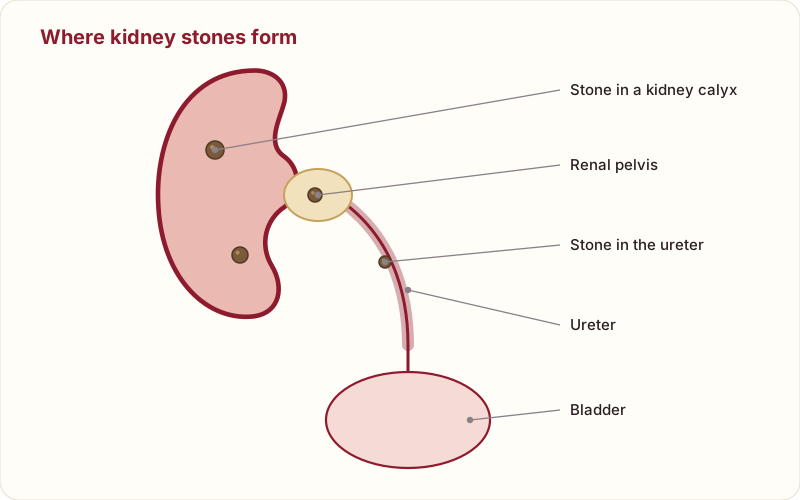
Swipe sideways to see the full diagram
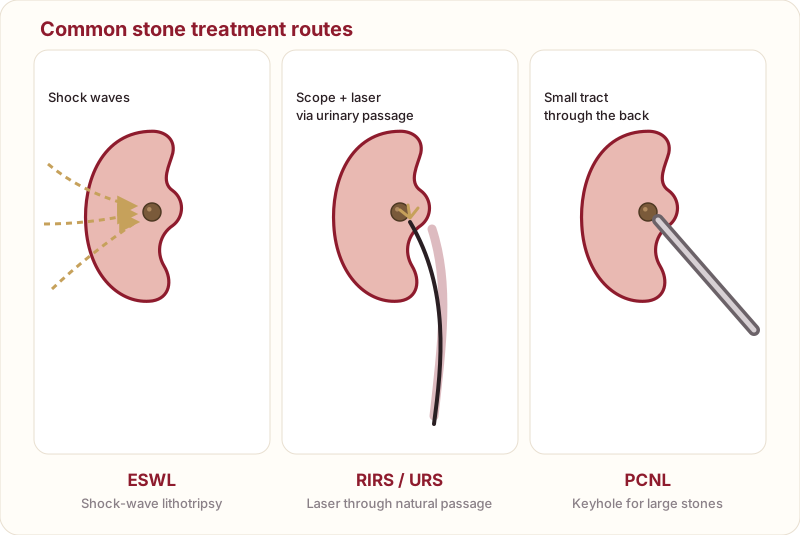
Swipe sideways to see the full diagram
Clinical symptoms
- Severe flank or back pain (renal colic)
- Pain spreading to the lower abdomen or groin
- Blood in the urine (visible or microscopic)
- Nausea and vomiting with pain
- Burning or pain while passing urine
Treatment options
- Medical expulsive therapy — fluids and medicines to help small stones pass on their own.
- ESWL — shock waves from outside the body to fragment smaller kidney stones.
- URS / RIRS (laser) — a scope passed through the natural passage, with laser fragmentation and no cuts.
- PCNL — keyhole removal of large stones through a small tract in the back, including the supine ‘Calcutta position’ technique described by Dr. Sinha Roy.
When to see a urologist
See a urologist for severe flank pain, blood in urine, or pain with fever and chills (possible infection needing urgent care).
This information is for education and does not replace an examination. Please consult a doctor for your own condition.
Book Appointment