
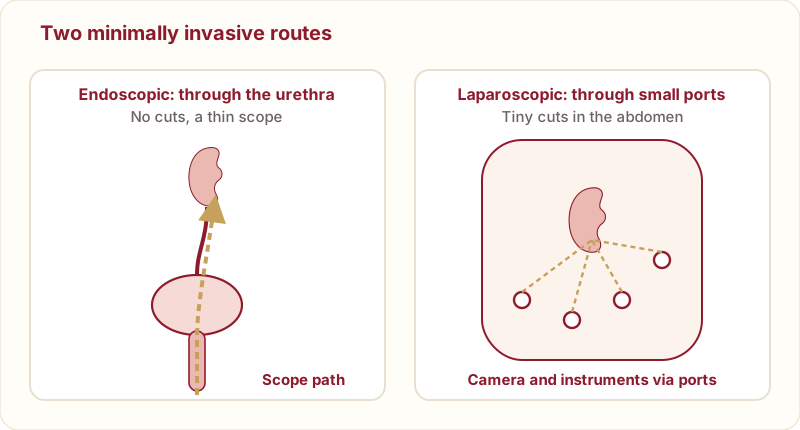
Swipe sideways to see the full diagram
Endoscopic procedures (no cuts)
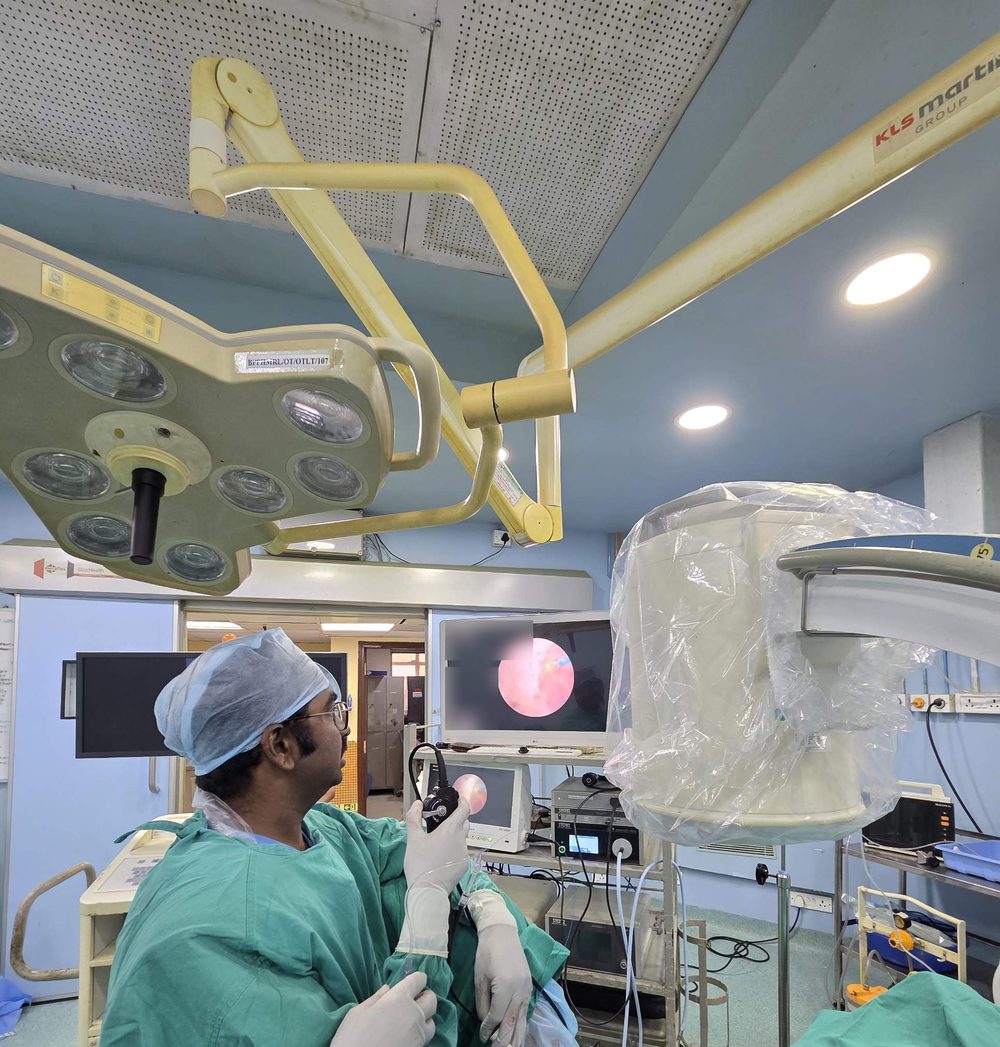
- Ureteroscopy and RIRS with laser for kidney and ureteric stones
- HoLEP and other procedures for an enlarged prostate
- Cystoscopy and transurethral resection for bladder tumours
- Internal urethrotomy for selected urethral strictures
Laparoscopic (keyhole) procedures
- Pyeloplasty for PUJ obstruction
- Removal of a kidney or part of a kidney when needed
- Donor kidney removal for kidney transplantation
- Selected prostate and bladder operations, some of which are also done robotically
What to expect
- Small cuts or none, and often less pain and a shorter hospital stay than open surgery, though this varies by patient and procedure
- Tests and anaesthesia assessment beforehand, with a clear discussion of the plan and risks
- A catheter or ureteric stent may be placed for a short time
- Occasionally the surgeon needs to change to open surgery for safety, or a second procedure is needed
When to see a urologist
Whether a keyhole or endoscopic procedure is suitable depends on your condition, anatomy and overall health, and is decided at consultation.
This information is for education and does not replace an examination. Please consult a doctor for your own condition.
Book Appointment