
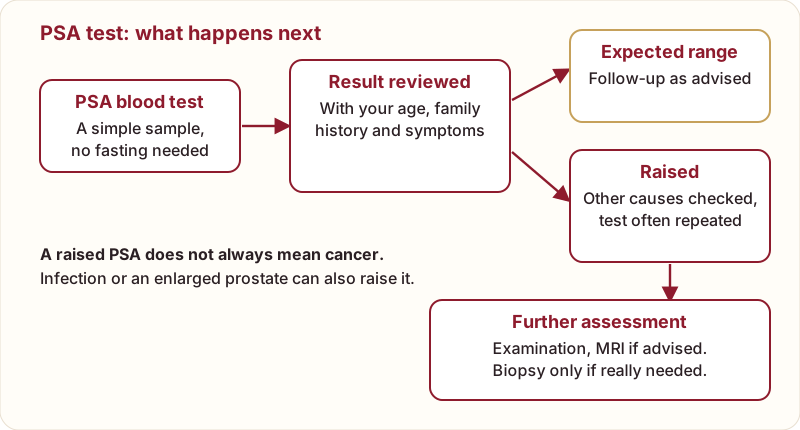
Swipe sideways to see the full diagram
What the PSA test tells us
- PSA is a protein made by the prostate and measured with a blood test
- It is used to assess prostate problems and, with other findings, the possibility of prostate cancer
- It cannot confirm cancer on its own, and a normal value does not completely rule it out
Common reasons for a raised PSA
- Prostate cancer
- Benign prostate enlargement (BPH)
- Prostate infection or inflammation (prostatitis)
- Urinary infection, or a recent catheter or prostate procedure
- Ejaculation or vigorous exercise such as cycling shortly before the test, which can sometimes raise it
How a raised PSA is evaluated
- Repeating the test, after treating any infection
- Digital rectal examination
- Other PSA measures, such as free PSA and PSA density
- MRI of the prostate in many cases
- Prostate biopsy when the findings suggest it is needed
Screening: points to discuss
- Men from about 50 years of age, or from 45 with a family history, can discuss screening with a urologist
- The decision is made together after discussing benefits and limits, including the chance of finding slow-growing cancers that may never cause harm
- Men with urinary symptoms should see a urologist at any age
When to see a urologist
Discuss screening with a urologist from age 50 (45 with a family history). See a urologist promptly for a raised PSA, an abnormal prostate examination, blood in the urine or persistent bone pain.
This information is for education and does not replace an examination. Please consult a doctor for your own condition.
Book Appointment