
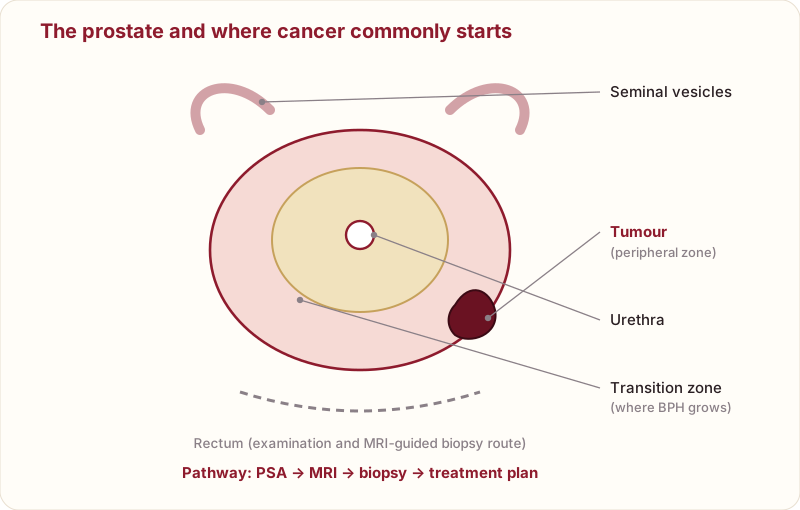
Swipe sideways to see the full diagram
Clinical symptoms
- Often no symptoms in the early stage (detected by PSA screening)
- Obstructive urinary symptoms similar to BPH in advanced stages
- Blood in the urine or semen
- Bone pain in the back, hips or pelvis if the disease has spread
Treatment options
- Active surveillance — close monitoring of low-risk, slow-growing cancers.
- Radical prostatectomy — surgical removal of the prostate and seminal vesicles, commonly done laparoscopically or robotically.
- Radiotherapy — external beam radiation or brachytherapy for localised disease.
- Androgen deprivation therapy — hormonal treatment for advanced or spread disease.
When to see a urologist
Discuss PSA screening from age 50 (45 with a family history). See a urologist promptly for a raised PSA, an abnormal examination, or persistent bone pain.
This information is for education and does not replace an examination. Please consult a doctor for your own condition.
Book Appointment