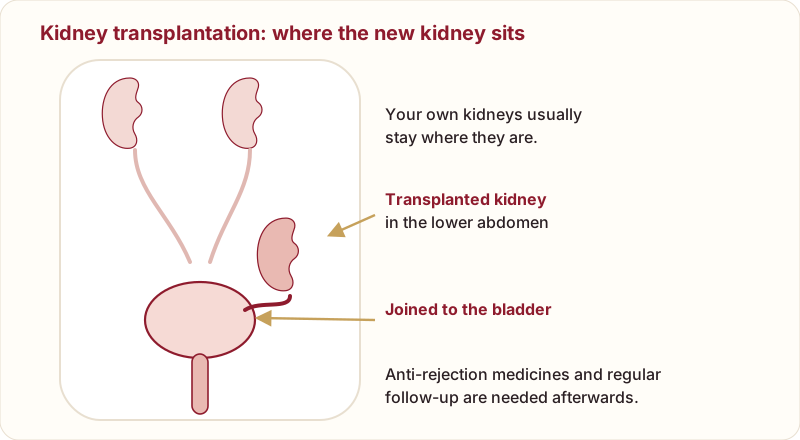
Swipe sideways to see the full diagram
Who may be considered
- End-stage kidney disease, either on dialysis or expected to need it soon
- General health fit enough for surgery and long-term medicines, as judged by the transplant team
- A suitable living or deceased donor
Evaluation of recipient and donor
- Blood group, tissue (HLA) matching and cross-match between donor and recipient
- Heart, lung, infection and cancer screening of the recipient
- Donor health checks, kidney imaging and kidney function tests, with counselling
- Legal clearance by the hospital authorisation committee under the Transplantation of Human Organs Act
The transplant process
- Surgery places the new kidney in the lower abdomen and connects it to blood vessels and the bladder
- Anti-rejection (immunosuppressant) medicines, usually taken long term
- Regular follow-up with blood tests for kidney function, drug levels and infection
- Urological care after transplant, for example for ureteric narrowing, stones or urinary infections
When to see a urologist
Speak to a kidney physician and a transplant surgeon early, when kidney function is falling or dialysis is being planned. Suitability for transplant is decided only after full evaluation.
This information is for education and does not replace an examination. Please consult a doctor for your own condition.
Book Appointment