
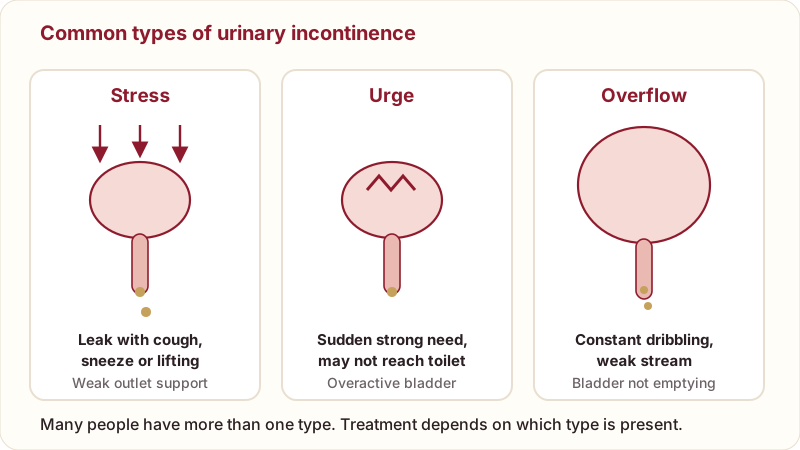
Swipe sideways to see the full diagram
Common types
- Stress: leakage on coughing, sneezing, laughing or lifting
- Urge: a sudden strong need to pass urine, with leakage before reaching the toilet
- Overflow: constant dribbling because the bladder does not empty fully
- Mixed: a combination of stress and urge leakage
Common causes
- Weak pelvic floor muscles, for example after childbirth or with ageing
- Overactive bladder
- Enlarged prostate or a urethral stricture that prevents full emptying
- Leakage after prostate surgery
- Nerve conditions, diabetes and some medicines
- Urinary infection, constipation and too much caffeine
How it is evaluated
- Detailed history and a 3-day bladder diary
- Examination, urine test and a check for residual urine
- Ultrasound, and a urodynamic study or cystoscopy in selected people
Management options
- Pelvic floor exercises and bladder training
- Weight control, less caffeine, and managing fluids and constipation
- Medicines for overactive bladder, after discussing possible side effects
- Treating the cause of poor emptying, such as prostate enlargement or a stricture
- Procedures such as sling surgery in selected people after full evaluation
When to see a urologist
See a doctor if leakage is regular, affects daily life, or comes with blood in the urine, pain, fever or difficulty emptying the bladder. Leakage is common, and it can be evaluated.
This information is for education and does not replace an examination. Please consult a doctor for your own condition.
Book Appointment