
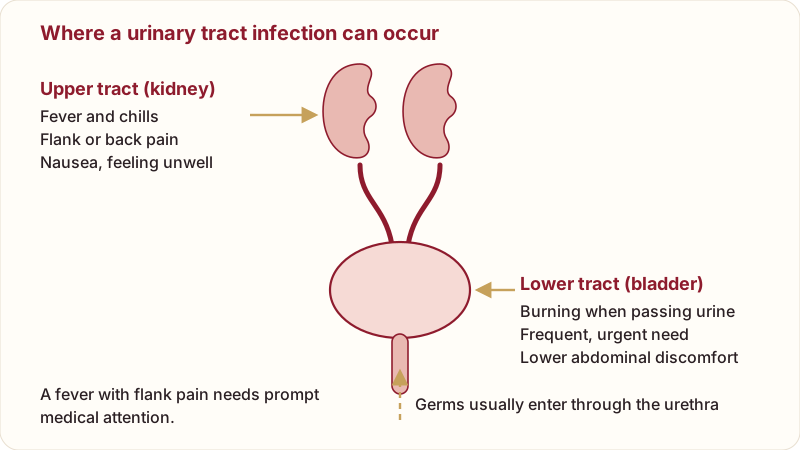
Swipe sideways to see the full diagram
Clinical symptoms
- Burning or pain while passing urine
- Frequent, urgent passing of small amounts of urine
- Lower abdominal discomfort, cloudy or foul-smelling urine
- Fever, chills and flank pain suggest the kidney is involved and need prompt care
Common causes
- Bacteria, most often E. coli, entering the urethra and bladder
- Stones, or incomplete emptying of the bladder, for example from prostate enlargement
- A urethral stricture or other blockage in the urinary tract
- Diabetes, pregnancy and the use of urinary catheters
How it is evaluated
- Urine routine examination and urine culture with antibiotic sensitivity
- Blood tests when fever or kidney involvement is suspected
- Ultrasound of the kidneys and bladder, with a check for residual urine
- Further tests, such as CT, cystoscopy or flow tests, for repeated infections or infections in men
Management options
- Antibiotics chosen by the doctor, guided by the urine culture; complete the prescribed course
- Drinking enough fluids and not holding urine for long
- Treating the cause, such as stones, prostate enlargement or a stricture, when infections keep returning
- Hospital care with injectable antibiotics for kidney infection or when unwell with fever
When to see a urologist
See a doctor promptly for burning urination with fever, chills, flank pain or blood in urine, or for symptoms in pregnancy, in men or in children. See a urologist for two infections in six months or three in a year.
This information is for education and does not replace an examination. Please consult a doctor for your own condition.
Book Appointment